

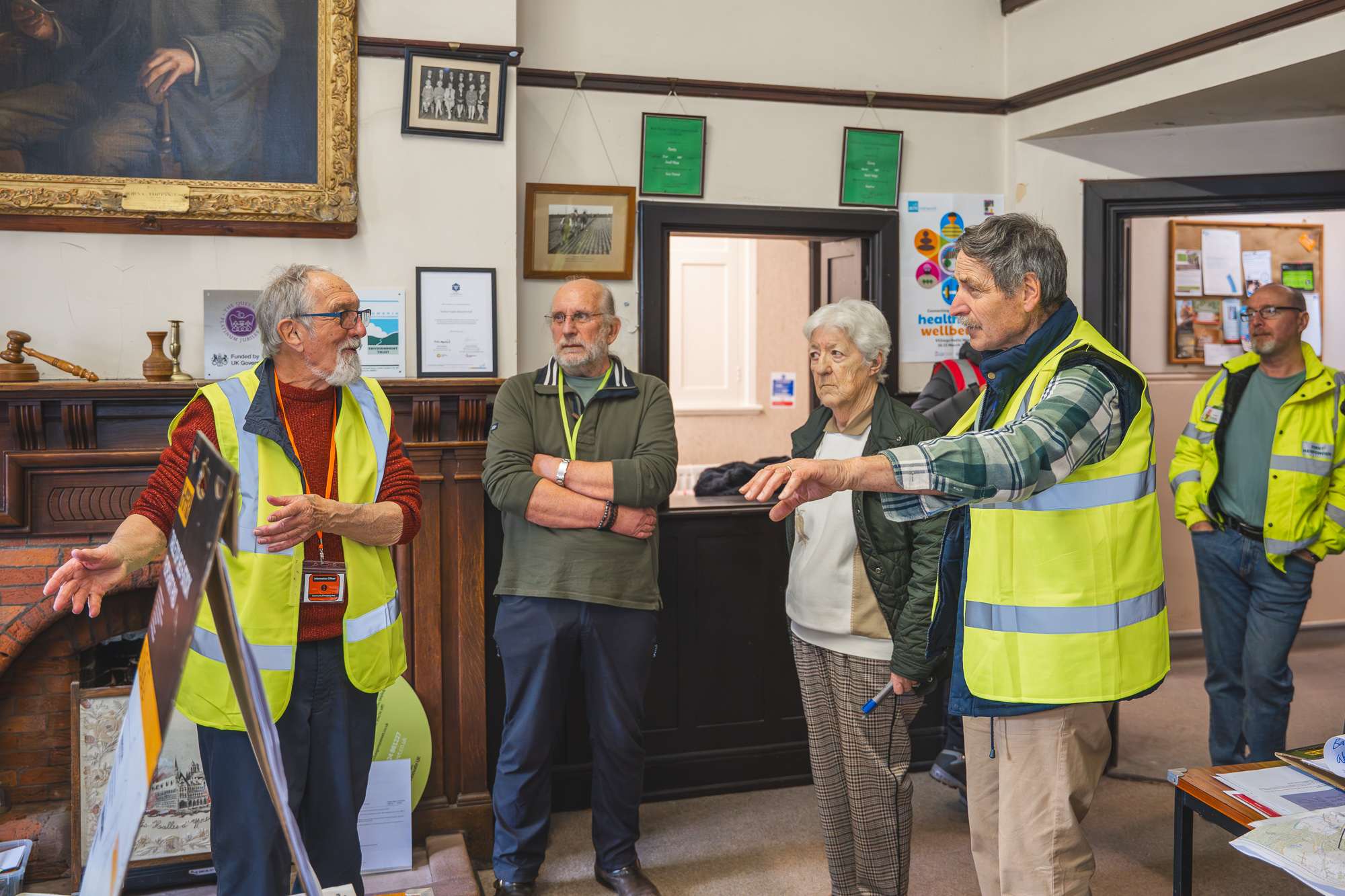
Skelton Toppin Memorial Hall received a £5,000 grant from the Royal Countryside Fund, delivered in partnership with ACTion with Communities in Cumbria, to explore how the building could be used as a Community Emergency and Resilience Hub.

This work was part of the hall’s wider major refurbishment project, helping them to understand how its refurbished facilities could support emergency preparedness, strengthen community resilience, and inform practical resources for other rural halls developing similar plans.

The work responded to the challenges faced by rural communities in Cumbria, where geography, an ageing population, and more frequent extreme weather can leave local people isolated during emergencies. It explored how the hall could provide a safe, practical point of support when statutory services were unable to reach residents quickly.

As part of this wider journey, the hall built on recent improvements including solar panels, PV battery storage, improved insulation, modern kitchen facilities, and V2X bi-directional charging potential. These upgrades helped make the building more sustainable day to day and better able to remain operational during power outages or severe weather.

Community engagement played a central role. Conversations with residents helped identify what people would need from an emergency hub, including warmth, information, food, safety, charging points, and support for families and pets. The engagement also identified volunteers interested in supporting a future community resilience group.

The project worked closely with Skelton Parish Council, community building trustees across Cumbria, and the Cumbria Local Resilience Forum. Through workshops and shared learning, it helped shape guidance and a practical resilience template that other rural halls could use to develop their own emergency plans.

A key milestone was the live test day, Exercise Cold Feet, held on 28 February 2026. This made Skelton Toppin Memorial Hall the first listed Community Emergency Hub in Cumbria to be tested through a live scenario. Volunteers, coordinators, community members, and Casualties Union actors worked through realistic emergency situations, helping to test space layout, information flow, volunteer roles, resource management, and power resilience.

The project resulted in an updated suite of community emergency planning resources, including hub guidance, household planning materials, and resources for parish councils. Together, these formed a practical resilience template designed to help rural communities plan more quickly and confidently for future emergencies.

Overall, the project strengthened the hall’s emergency capacity, improved local preparedness, built stronger community connections, and produced practical tools that could benefit rural communities across Cumbria and beyond. Skelton Toppin Memorial Hall was left well placed to continue developing as a fully operational Community Emergency Hub.


Become a Supporter

Community Buildings Directory