Community Emergency Planning

ACT works with communities across Cumbria to support and raise awareness of Community Resilience and Emergency Planning.

How can your community be better prepared and support one another in difficult times? What would you do in the first 48 hours of a serious emergency if emergency services were delayed or unavailable? A Community Emergency Plan can reduce the impact and help your community recover faster.

Communities are encouraged to plan in order to:

  • Be better prepared for an emergency
  • Know what to do, before outside help and emergency services can arrive
  • Work with emergency services and other agencies effectively, using local knowledge
  • Recover more quickly and effectively after an emergency

Extreme weather, such as flooding and heavy snow, is one of the most common emergencies communities face. However, other incidents can also happen, including prolonged power cuts, gas leaks, fires, major traffic incidents, and health emergencies such as pandemics. A Community Emergency Plan helps people prepare in advance, coordinate support during an incident, connect with emergency services and local authorities, and recover more effectively afterwards.

Visit the ‘Relevant Resources‘ section below for guidance and template documents

ACT works closely with communities and partner organisations, including the Joint Emergency Management and Resilience Team, who deliver Emergency Planning for both Unitary Authorities in Cumbria.

Cumbria also has a Community Resilience Coordinator, Liam Ryan, who supports  communities to build community resilience, understand local risks and plan for emergencies.

Free Public Liability Insurance

ACT works with Cumbria Neighbourhood Watch (CNWA) who promote safer neighbourhoods and kinder communities. The Home Office fund the national Neighbourhood Watch Public Liability Insurance. Joe Murray, the chair of CNWA has negotiated for Cumbria’s emergency planning groups to be given this free public liability cover.

This really useful offer is easy to access by:

  • Joining CNWA – it’s free and can be done online
  • Having an emergency plan and risk assessment (see ‘Relevant Resources’ below)
  • Using the logo on your publicity to show you are being supported with NWA insurance

Further details here

If you are interested in joining Neighbourhood Watch in Cumbria, please contact us

Relevant Resources

For communities in the old Eden locality, a small £150 Community Emergency Planning grant is available, plus a further £150 Community Emergency Readiness grant is available to help communities with a plan to be better prepared to deliver it. Grant guidance and application forms are available under ‘Relevant Resources’ below.

Third party resources

Visit: https://cumbriaprepared.org.uk  for a wide variety of resources to support communities, businesses, and individuals to plan for emergencies, including Environment Agency advice specifically about flooding.

Visit The Flood Hub website www.thefloodhub.co.uk – supporting communities to manage flood and coastal risk across the North West.

ACT’s national Network organisation Action with Communities in Rural England has produced a guide that you can access here: https://acre.org.uk/a-guide-to-rural-community-resilience/

Community Emergency Hubs

The Cumbrian Councils are trying out the idea of communities having their own emergency hubs.

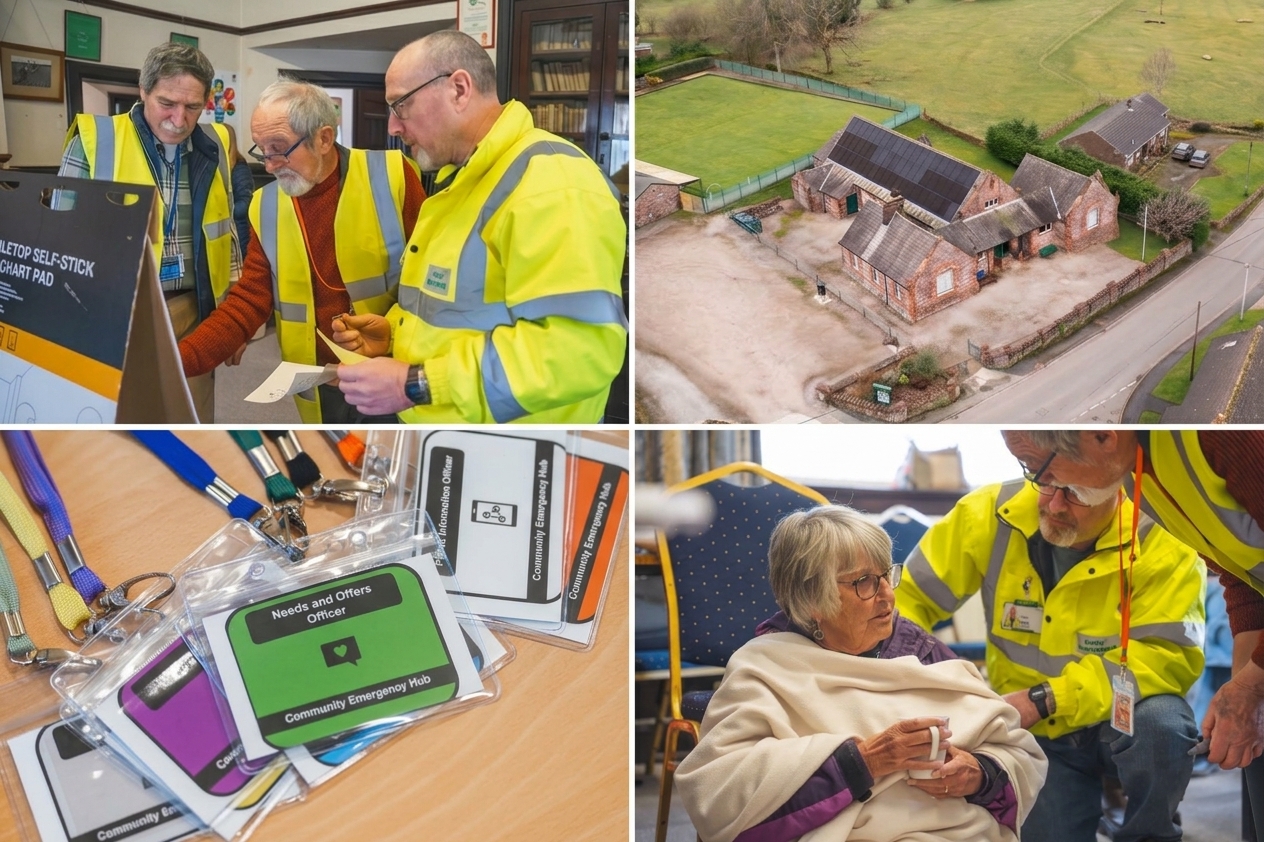
A community emergency hub is a safe place for communities in an emergency. People can come together and offer each other support in an incident or emergency.

Community members can use a hub to:

  • respond to challenges as a community
  • improve communication with responding agencies
  • help local recovery

Communities know what their local issues might be and are often best placed to respond to them. Some communities prone to challenges may already have a Community Emergency Plan and a safe place. If so, they can add more safe places as hubs.

Hubs are ideal as a safe space for:

  • all community members to use, where they can respond to and recover from an incident
  • coordinating local resources, share information and retain oversight of the incident
  • communicating with responding agencies
Any community building can be a hub, providing its safe and accessible during an incident.

It’s good for the building to have access to:

  • a backup power supply or generator
  • heating
  • toilets
  • a kitchen
To help you get started with your hub, the Cumbrian Councils can give you a kit of resources in an A3 ziplock wallet.

Before you get a kit, you should check:

  • if anyone else in your community has got one – you can ask your local Parish Councillor
  • where to store the kit, so it is always accessible and available during an emergency